
Introduction
The tracking challenge that keeps many CMOs occupied isn’t channel proliferation. It’s the inability to see how those channels influence each other. Messages go out across email, social, digital ads, out-of-home, and experiential activations, but the analytics platform tells several different, sometimes conflicting, conversion stories. When every channel claims credit for the same sale, it becomes difficult to optimize budget with real confidence.
According to research from MoEngage analyzing B2C marketing campaigns in 2025, 82.4% of marketers use email as their primary channel, yet the most successful brands tend to coordinate three or more channels at once. This piece looks at the attribution gap that most omnichannel guides skip over: how to design channel coordination that makes customer journeys trackable, without requiring a dedicated data engineering team.
The Real Definition, and Why Most Teams Get It Wrong
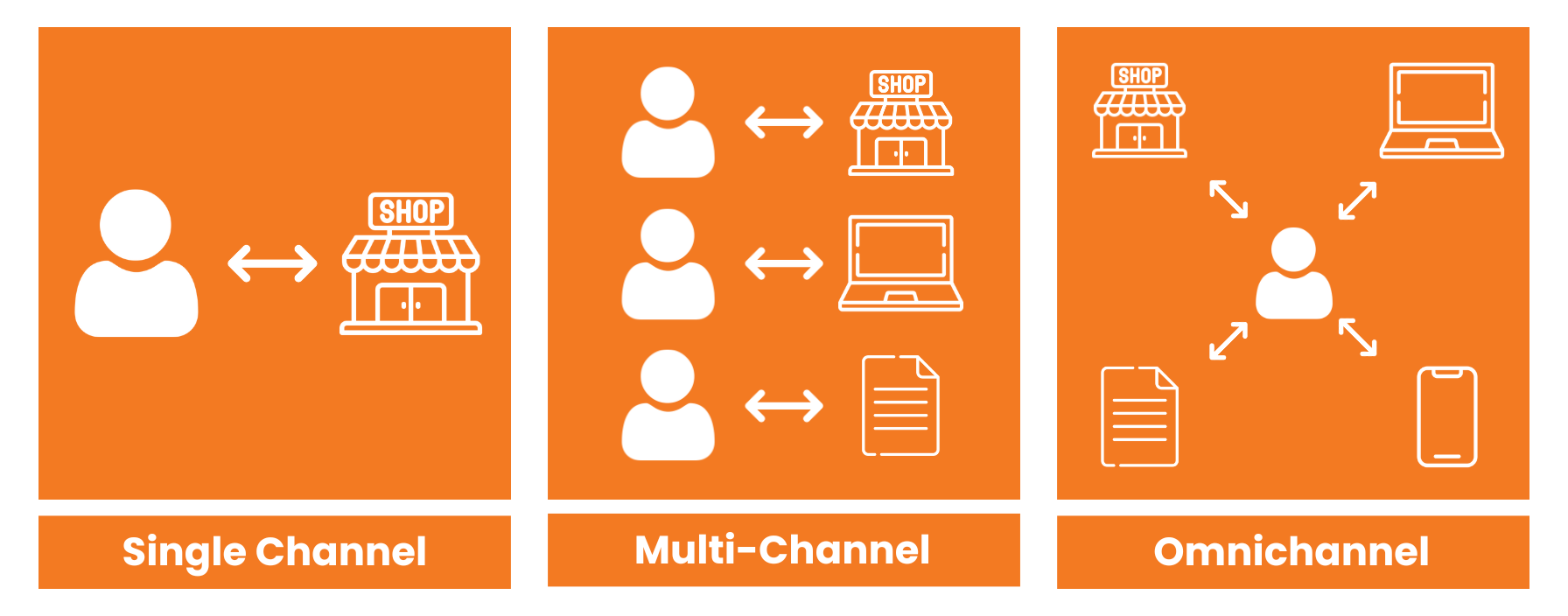
An omnichannel marketing strategy is a customer-centric system where channels share data in real time, coordinate messaging, and make every touchpoint attributable to a unified buyer journey. The definition centers on data architecture and signal exchange, not simply message distribution.
Many teams believe omnichannel marketing means running campaigns across multiple channels, or keeping the brand consistent everywhere. They add a platform to their existing mix, make sure the logo looks the same everywhere, and call it done. The result tends to be the same fragmented attribution, the same conflicting performance data, and budget allocated based on which channel argues its case most persuasively rather than which one actually drives outcomes.
When an email platform knows a customer just visited a physical store, a well-built omnichannel system won’t send a cart-abandonment reminder that same afternoon. When a paid search campaign knows a customer engaged with an out-of-home ad on a military base the day before, it can adjust bid strategy to capitalize on that already-primed awareness.
Customer-centricity here isn’t a positioning phrase. It’s a data architecture requirement. A customer data platform or data warehouse needs to resolve the same person across web sessions, mobile app interactions, email opens, store visits, and customer service calls. Without that unified identifier, a brand is effectively marketing to fragments of people rather than whole customers.
When channels genuinely exchange signals through real-time coordination, a brand can see which combinations of channels actually drive outcomes, not just which channel happened to touch the customer last. Businesses that adopt well-defined omnichannel strategies tend to see meaningfully higher year-over-year customer retention rates compared to those without coordinated channel systems, a gap that tends to exist because genuine omnichannel coordination removes friction from the buyer journey, while a fragmented multichannel approach tends to add it.
Standard definitions often emphasize consistency: matching colors, fonts, and tone across channels. Consistency is an output of an omnichannel strategy, not the strategy itself. The actual mechanism is data exchange and coordinated decision-making that makes the customer’s experience feel seamless because the underlying systems genuinely know what happened in the previous interaction.
Most organizations inherit channel silos from their own structure: separate teams for email, social, paid media, and events; vendor fragmentation, where each channel runs on a different platform with its own database; and legacy attribution models that can’t see cross-channel influence. Breaking those silos generally requires real executive commitment to shared customer data and metrics that reward coordination over individual channel performance.
How Single-Channel and Multichannel Strategies Break Attribution
Single-channel strategies are measurable, but incomplete. It’s possible to track every email open, click, and conversion with real precision, along with cost per acquisition, conversion rate, and ROI down to the decimal. What that measurement can’t show is how many of those email conversions were actually primed by a podcast ad the customer heard the week before, an Instagram post seen the day before, or a retail display walked past that same morning. The channel looks effective in isolation, but a meaningful part of that effectiveness may be borrowed from influences the measurement can’t see.
Multichannel strategies distribute messages across platforms, but tend to treat each channel as an independent performance unit. The email team has monthly send targets and open-rate benchmarks. The paid search team optimizes for cost per click. The social team chases engagement. Each channel reports its own conversion count at month-end, and when those numbers are added together, they can easily total well over 100% of actual sales, because every channel that touched a customer claims credit for that customer’s conversion.
When email, paid search, and retargeting all claim credit for the same purchase, budget allocation decisions end up relying on guesswork. Channel teams compete for resources by presenting their own contribution as favorably as possible. Paid search points to last-click conversions. Email highlights assisted conversions. Retargeting claims it closed the deal. Finance has to decide which channel to fund next quarter, and the answer often depends on which team makes the more convincing case rather than which channel actually drives incremental value.
That competition tends to produce over-investment in last-click channels, like search and retargeting, that harvest demand created elsewhere, and under-investment in the awareness and consideration channels, like out-of-home, display, video, and experiential, that build that demand in the first place. Budget tilts toward channels that look efficient under a broken measurement system, starving the channels that made everything else work in the first place.
The customer doesn’t experience channels as separate. They see one brand across multiple environments, and their decision to purchase reflects cumulative influence from many touchpoints, not a single channel that heroically closed the deal. When a measurement system can’t see that cumulative influence, a brand ends up optimizing for measurement artifacts instead of actual customer behavior.
Why Channel Independence Creates False Performance Signals
Last-click attribution tends to over-credit bottom-funnel channels, because those channels typically touch customers who are already close to a purchase decision. A customer sees an out-of-home campaign on a military base, later searches the brand name plus product category, clicks a paid search ad, and converts. Under last-click attribution, paid search gets 100% of the credit and the out-of-home campaign gets none. The next budget cycle often cuts out-of-home spend because it “shows no conversions,” and paid search’s cost per acquisition then climbs, because the awareness driver that generated those branded searches in the first place has been removed.
Awareness channels, including out-of-home, display, video, podcast, and experiential, drive intent that search and retargeting later harvest, but they typically receive no attribution credit under last-click models. A college student might encounter a brand through campus ambassadors, see Instagram ads for two weeks, watch a YouTube explainer, then finally search the product name and convert through organic search. The attribution system credits organic search, a zero-cost channel, when the actual conversion drivers were experiential, social, and video content, all of which required real budget.
Consider a beverage brand running out-of-home ads at 50 military installations, retargeting those locations with mobile display, and bidding up paid search in the same ZIP codes. Under last-click attribution, paid search might show a strong return and out-of-home might show almost nothing. If the brand tests pausing out-of-home in a subset of those markets, paid search conversion rates in those same markets often drop noticeably within a few weeks. The out-of-home impressions were creating the branded search volume that made paid search look efficient in the first place. Multichannel measurement missed that dependency entirely.
Multi-touch attribution models, including linear, time-decay, and position-based approaches, improve on last-click by distributing credit across multiple touchpoints. Linear gives every touch equal weight. Time-decay gives more credit to recent touches. Position-based (U-shaped) rewards the first and last touches while splitting credit among the middle interactions. These models are directionally better than last-click, but they still fail when channels don’t share identity data. Without a unified customer identifier, the same person can look like three different people across web, mobile app, and in-store purchases. The customer who browses on desktop, adds to cart on mobile, and buys in-store fragments into what looks like three separate single-touch journeys instead of one coordinated multi-touch journey.
Channel managers optimizing for their own isolated metrics can create conflicts the customer experiences as brand dysfunction. An email team sending daily promotional messages to hit engagement targets, a social team posting six times a day to maximize reach, and an SMS program sending time-sensitive offers twice a week can combine to put 15 or more brand touches in front of a single customer in a single week. Each channel hits its own volume target while the coordinated customer experience collapses, and the customer unsubscribes from everything.
Bad attribution leads to bad budget allocation, which tends to compound the problem in the next cycle. Awareness channels get defunded because they show no last-click conversions, branded search volume drops, retargeting pools shrink, and bottom-funnel efficiency declines. The response is often to increase bottom-funnel spend to chase the same shrinking audience, driving up costs while conversions fall. The pattern starts with measurement that can’t see how channels actually work together.
Building an Omnichannel Marketing Strategy That Closes the Attribution Gap
Moving from concept to execution requires three foundational decisions that determine whether an omnichannel marketing strategy produces measurable results or just better-coordinated campaigns that still can’t prove their own impact. Most teams skip straight to channel coordination, deciding what message to send where and how to keep creative consistent, without first laying the data groundwork that makes attribution possible in the first place.
The goal is making the buyer journey observable and attributable without requiring the customer to manually connect their own touchpoints. Customers won’t report that they saw an out-of-home ad before searching a brand name, or that an email reminded them of a product they viewed on mobile the week before. The underlying systems have to infer and track those connections through shared identifiers and real-time data exchange. According to the American Marketing Association’s analysis, 73% of shoppers use multiple channels to research, compare, and purchase products, which means brands that can’t track cross-channel journeys are missing the majority of their customers’ actual decision process.
These are infrastructure decisions, not tactics. Brilliant creative, perfectly timed messages, and compelling offers across ten channels won’t produce measurable attribution if those channels don’t write to a shared customer record and can’t see each other’s activity. Data architecture comes first, then orchestration rules, then channel tactics. Teams that reverse that sequence build campaigns that look coordinated on the surface but remain unmeasurable underneath.
The Three Data Architecture Decisions
Decision 1: A unified customer identifier system. The same person needs to be resolved across web sessions, mobile app usage, email interactions, CRM records, point-of-sale transactions, and customer service contacts. This means choosing between deterministic matching (login-based identity), probabilistic matching (device graphs that infer connections), or a hybrid of both.
Deterministic matching works well when customers log in consistently, tying every action to an authenticated user ID. It’s accurate, but it only captures authenticated sessions, missing a lot of anonymous browsing and research behavior. Probabilistic matching uses device signals, IP addresses, and behavioral patterns to infer that multiple devices belong to the same person. It captures more anonymous activity and cross-device behavior, but its accuracy is degrading as privacy regulations limit tracking signals and browsers block third-party cookies. Hybrid approaches combine both, using deterministic matching where available and falling back to inference where necessary, at the cost of added complexity.
Privacy regulations, including GDPR, CCPA, and various state privacy laws, limit cross-device tracking and require consent for many identity-resolution techniques. First-party data strategies are becoming essential as a result: customers need a reason to willingly identify themselves through account creation, loyalty enrollment, email signup, or app download, and those voluntary identifiers then become the backbone of cross-channel tracking.
Decision 2: A centralized customer data platform or data warehouse. All channels need to write customer interactions to a shared system of record. When a customer opens an email, that event writes to the CDP. When they visit the website, add a product to cart, or walk into a retail location, those events write to the same unified profile. Real-time or near-real-time synchronization lets channels see what other channels have recently done: an email platform checking the CDP before sending a cart-abandonment reminder might discover the customer already completed the purchase in-store two hours ago, and suppress the reminder accordingly.
Decision 3: An attribution model that credits multiple touchpoints. Single-touch models (first-click or last-click) are measurement artifacts that don’t reflect how customers actually make decisions. Multi-touch models distribute credit across the journey, acknowledging that awareness, consideration, and conversion all contribute to the outcome.
Linear attribution gives every touchpoint equal credit, which is simple but ignores that some touches matter more than others. Time-decay attribution weights recent touches more heavily, reflecting the intuition that proximity to conversion signals influence. Position-based (U-shaped) attribution gives the most credit to first and last touches while splitting the remainder among middle interactions, rewarding both the channel that introduced the customer and the one that closed the sale. Data-driven algorithmic attribution uses machine learning to assign credit based on statistical contribution across thousands of journeys; it requires substantial data volume, but tends to produce the most accurate credit distribution.
The choice of model should reflect the typical customer journey length and, just as importantly, organizational consensus. If channel owners don’t accept the attribution model, they won’t use its results to optimize their own campaigns. Choosing a model stakeholders believe is fair, implementing it consistently, and refining it over time as trust builds tends to matter more than chasing perfect mathematical precision. Building reporting that shows assisted conversions, not just last-click credit, is what makes this concrete: showing an out-of-home or display team how many customers touched their channel before converting through search or email makes the channel’s real contribution visible.
The cost-complexity tradeoff is real. Perfect identity resolution across every device and channel is expensive and increasingly constrained by privacy regulation. Even partial unification meaningfully improves attribution accuracy compared to fully siloed channels. Starting with the identifiers already capturable through first-party relationships, account creation, loyalty enrollment, email signup, and connecting the highest-volume channels first, tends to be a more realistic path than attempting full unification on day one.
Channel Orchestration Rules That Make Buyer Journeys Visible
Orchestration means channels check the shared customer record before taking action, not only after. An email platform querying the CDP before every send, asking whether the customer purchased in the last 48 hours, contacted support this week, or unsubscribed from promotional messages but still accepts transactional notifications, reflects the customer’s current state across all channels rather than just their email engagement history.
Frequency capping across channels limits the total number of brand messages a customer receives per week, regardless of which channel sends them. This prevents the experience of receiving daily emails, several retargeting ads across different networks, SMS alerts, and mobile push notifications all within the same 24 hours. Each channel staying within its own individual cap can still produce message bombardment when a customer sees the cumulative total. Cross-channel frequency management requires a shared counter that increments every time any channel touches the customer; when that limit is hit, lower-priority channels pause while high-priority channels, like transactional confirmations and time-sensitive service updates, continue.
Frequency capping rule template:
- Define a total brand message limit per customer per time period (for example, a maximum of 8 messages per week across all channels).
- Assign channel priority weights (transactional, then service, then promotional).
- Create suppression logic: if a customer hits the frequency cap, pause the lowest-priority channels first.
- Set a lookback window, counting messages from the past 7, 14, or 30 days depending on campaign velocity.
- Build override exceptions for urgent account notifications, order confirmations, or compliance-required messages, which should bypass caps entirely.
- Monitor opt-out rates by frequency tier to calibrate the right caps over time.
Sequential messaging based on engagement creates deliberate customer journeys instead of random channel overlaps. If a customer opens an email but doesn’t click, a retargeting platform can receive a signal to show a display ad highlighting the same offer within the next 12 hours. If they click the email and view a product page but don’t add to cart, remarketing can escalate to a video ad demonstrating the product in use.
A university might use sequential orchestration for prospective student outreach. Students who download a program brochure receive an email series on curriculum and career outcomes. Students who open at least two emails but don’t schedule a campus tour receive a retargeting ad featuring student testimonials and a tour signup form. Students who schedule a tour receive SMS confirmation and reminders, while email shifts from promotional content to pre-visit preparation guides. Each channel builds on the previous one’s engagement, creating a coordinated journey instead of scattered messages.
Channel prioritization by customer preference honors how individual customers actually want to engage. Some customers open every email and ignore push notifications; others disable email but respond instantly to SMS. A CDP that tracks which channels each customer actually engages with, and orchestration rules that route messages through the demonstrated preference first, reduces wasted impressions and tends to improve conversion, since a time-sensitive offer sent through a customer’s preferred channel is more likely to be seen and acted on within the campaign window.
Implementing this requires marketing automation or journey orchestration platforms that can read from and write to a CDP in real time. Batch processes that update customer records once a day or once a week can’t support responsive sequential messaging; a two-hour cart-abandonment SMS window requires systems that detect the event and evaluate orchestration rules within minutes, not hours.
The measurement payoff of coordinated sequences is that they make it obvious which channel combinations actually work, because deliberate patterns are being tested rather than random overlaps. Creating a cohort that receives email plus retargeting, another that receives email plus SMS, and a control that receives email alone, then measuring conversion rate, time to conversion, and average order value across cohorts, isolates the incremental value of adding a second channel with real precision.
Omnichannel Marketing Examples That Solve Real Attribution Problems
Three examples spanning retail, ecommerce, and a regulated industry show how attribution-focused strategies work in practice. Each demonstrates a different attribution challenge: bridging physical and digital environments, unifying data across proprietary platforms, and coordinating channels under compliance constraints. In each case, the measurement infrastructure came before the campaign tactics, not after.
Best Buy’s In-Store and Digital Attribution Model
Best Buy’s core attribution challenge was that customers research online and buy in-store, which made digital channel contribution largely invisible under traditional point-of-sale attribution. Store purchases were credited to the retail channel exclusively, while the website visits, app usage, and email engagement that actually drove customers into stores showed zero conversions. Digital teams couldn’t prove their value, and budget allocation favored in-store marketing even as digital influence on purchase decisions kept growing.
The solution combined location-targeted inventory messaging, in-store mobile app integration, and cart persistence across channels. The website shows real-time in-store product availability based on the customer’s location, converting browsing into a store visit with purchase intent already established. The mobile app’s barcode scanner lets in-store shoppers compare products and check prices while physically holding merchandise, and every scan creates a digital attribution signal tied to that physical visit. If a customer scans three products in one department and purchases one at the register, the attribution system credits both the in-store experience and the digital research tools that supported it.
If a customer abandons a mobile app cart and then visits a store within the following week, the app can send a push notification when the customer enters that location, connecting the earlier digital browsing session to the physical visit and making the attribution link explicit. Store purchases get attributed back to the digital touchpoints that drove the visit when customers check in through the app, scan products before buying, or complete a cart that started online.
How Amazon Uses Cross-Channel Signals
Amazon’s omnichannel approach relies on universal login and first-party data at a scale most brands can’t replicate. Every interaction, whether search on desktop, product views on the mobile app, Alexa voice queries, or streaming TV ad exposure, writes to the same customer record, creating near-complete attribution visibility across devices, channels, and ad formats. A customer who watches a TV ad for a kitchen appliance Thursday evening, searches that product category Friday morning, and purchases Saturday afternoon has all three events connected to the same customer ID.
Product searches on Amazon trigger retargeting through Amazon’s own demand-side platform across the open web. A customer who searches for wireless headphones may later see sponsored display ads for specific headphone models on unrelated sites and apps over the following week; when they return to Amazon and purchase, the system credits both the on-site search and the off-site retargeting exposure. Mobile push notifications draw on desktop browsing history, so a customer who views hiking boots on a laptop Monday might get a mobile notification Tuesday highlighting a price drop on those exact boots. Alexa voice shopping integrates with purchase history and cart data synced across every Amazon property, so adding an item through Alexa, browsing it on mobile, and completing the purchase on desktop still registers as one unified journey.
Research from Wharton Executive Education, analyzing 2021 Omnisend data across more than 135,000 campaigns, found that marketers who used three or more channels in a campaign earned a 494% higher order rate than those who focused on a single channel, a useful illustration of the compounding value of coordinated multi-channel approaches, even for brands operating at a much smaller scale than Amazon.
Amazon’s measurement advantage comes from controlling the full stack: the advertising platform, ecommerce platform, content streaming service, voice assistant, and devices all feed into one system, allowing near-complete attribution accuracy. Most other brands can’t replicate that closed-loop infrastructure, but the underlying lesson still applies: investing in login incentives, loyalty programs, personalized recommendations, saved payment methods, and order history access builds meaningful identity resolution across a brand’s own owned properties, even without Amazon’s scale.
A Compliance-Safe Omnichannel Approach for Pharma
Pharmaceutical marketing operates under HIPAA privacy rules, FDA adverse-event reporting requirements, and consent regulations that limit identity resolution and data sharing. An omnichannel approach in this category has to coordinate channels while respecting legal boundaries that prevent connecting patient health information across touchpoints.
Patient portals that require login provide first-party identity, but HIPAA generally prohibits sharing that identity with marketing platforms, so healthcare provider channels have to remain fully separate from patient channels to avoid disclosure violations. Attribution can’t track individual patient journeys when regulation prevents creating a unified patient identifier across marketing and medical systems.
A practical approach focuses on channel coordination within those boundaries. Patient portals can coordinate email, SMS, and app notifications within the portal environment itself, an email reminder to refill a prescription can trigger an app notification when that refill is ready for pickup, but those messages stay isolated from external marketing channels. Healthcare provider (HCP) channels operate as an entirely separate coordinated system: sales rep interactions, medical conference sponsorships, journal advertising, and professional education webinars can coordinate with each other using National Provider Identifier (NPI) numbers as the unifying key, without ever merging with patient-facing marketing.
A diabetes medication manufacturer, for example, might run separate omnichannel programs for patients and prescribers. Patients enrolled in a co-pay assistance program receive coordinated email, SMS, and portal messages about refill timing and dosing reminders. Prescribers who request clinical data at medical conferences receive follow-up emails with peer-reviewed studies, then see retargeted ads in medical journals highlighting the same clinical endpoints. The two programs coordinate internally but never share data across the patient-prescriber boundary, maintaining HIPAA compliance throughout.
Attribution in this environment shifts to aggregate lift measurement when individual-level tracking isn’t permitted. Pharma brands can track prescription volume by geography and time period, correlating with campaign exposure at the market level rather than the patient level. If markets receiving coordinated email plus direct mail show meaningfully higher prescription volume than email-only markets, that supports the value of the channel combination without tracking any individual patient’s journey. Holdout tests can measure incremental impact the same way: some markets receive a full multichannel campaign while matched control markets receive a single-channel approach, and the volume difference, measured through third-party pharmacy data, reveals real campaign effectiveness without patient-level attribution. The broader principle holds well beyond pharma: when privacy or legal constraints prevent full identity resolution, attribution shifts toward aggregate lift measurement, but channel coordination still adds real value for customer experience, even when individual journeys can’t be tracked.
Measuring What Actually Matters in an Omnichannel Strategy
The metric shift from channel-level conversion rate to customer-level lifetime value and retention is what distinguishes a mature omnichannel program from cosmetic multi-channel coordination. Single-channel metrics, like email open rate, search click-through rate, or display impression share, remain useful for optimizing individual tactics, but genuine omnichannel success tends to show up in customer behavior patterns instead: repeat purchase rate, cross-category purchases, referral generation, and tenure.
According to MoEngage’s 2025 customer engagement research, the most common business objective B2C marketers cite for implementing an omnichannel strategy is increasing customer engagement and loyalty, reflecting a broader industry recognition that coordinated experiences drive retention more effectively than conversion optimization alone. Measuring omnichannel success well requires choosing a North Star metric that reflects long-term customer value, then building attribution models that show how channel combinations actually contribute to that metric.
Choosing a North Star Metric
The North Star metric is the single measurement that best captures long-term customer value and aligns every channel team toward a shared goal. It needs to be measurable with available data, influenceable by marketing actions, and directly connected to business outcomes, and channel team incentives should tie to moving this shared metric rather than optimizing individual channel KPIs.
Customer lifetime value (CLV) captures total revenue per customer over their full relationship with a brand, discounted to present value. It reflects repeat purchase behavior, order value growth, and retention duration in one number, and credits channels for extending customer tenure and increasing purchase frequency, not just driving first transactions.
Retention rate or repeat purchase rate measures the percentage of customers who buy again within 90, 180, or 365 days of their first purchase. It directly measures whether an omnichannel experience builds loyalty. A channel that drives high first-purchase volume but low repeat rates, like email blast promotions to discount-hunters, will score worse under this metric than a channel that drives lower volume but higher-quality customers.
Net Promoter Score (NPS) or customer satisfaction are leading indicators of retention and referral behavior. Customers who rate their experience highly tend to be more likely to repurchase and recommend the brand, and channels get evaluated on the quality of experience they deliver, not just the raw quantity of conversions.
Share of wallet measures the percentage of category spending a customer allocates to a given brand versus competitors. It’s most relevant when customers buy the same product category from multiple brands, such as fast food, apparel, or streaming services, and growing share of wallet indicates that an omnichannel experience is genuinely winning competitive preference.
|
North Star metric |
Best for |
Data requirements |
Channel alignment benefit |
|
Customer Lifetime Value (CLV) |
Subscription businesses, high repeat-purchase categories |
Purchase history, customer tenure, churn data |
Rewards channels that attract high-value customers and extend relationships |
|
Retention rate |
Transaction businesses with identifiable customers |
Customer ID, repeat purchase tracking |
Focuses all channels on experience quality, not just acquisition volume |
|
Net Promoter Score (NPS) |
Brands prioritizing word-of-mouth growth |
Survey responses linked to customer IDs |
Credits channels for quality interactions that drive advocacy |
|
Share of wallet |
Multi-brand competitive categories |
Category spending data, competitive purchase tracking |
Shows which channels win preference versus competitors |
A metric only works if it’s measurable with current data infrastructure. CLV requires tracking purchase history over time, which demands unified customer identifiers across transactions; without the ability to resolve repeat purchases to the same customer ID, CLV can’t be measured accurately. Retention rate works well when returning customers can be identified, but fails when most transactions are anonymous.
The metric also has to be influenceable by marketing in a way that’s isolatable through testing. Product quality, pricing, and competitive dynamics all affect retention and NPS, but marketing’s specific contribution should be visible through holdout markets, control groups, or pre/post measurement. And the metric needs to align with the business model itself: subscription businesses generally optimize for retention and subscriber lifetime value, frequent-purchase categories like groceries or personal care optimize for purchase frequency and basket size, and considered-purchase categories like automotive or B2B services optimize more for conversion rate and deal size, since customers in those categories buy infrequently.
A common implementation mistake is choosing CLV or retention as the North Star metric while still bonusing channel teams on last-click conversions. If email managers get paid based on last-click-attributed conversions, they’ll optimize for send frequency and promotional discounting to maximize their own attributed number, even when those tactics erode customer experience and long-term retention. Incentives need to align with the chosen metric, or teams will end up gaming the measurement system instead of improving the actual outcome.
Secondary metrics worth tracking alongside the North Star include assisted conversions per channel (showing how often a channel touched a customer who later converted through any channel), cross-channel journey frequency (revealing which channel combinations occur most often), and time from first touch to conversion (showing whether coordination is accelerating purchase decisions). Companies that prioritize customer experience have been found to generate meaningfully higher profits than competitors that don’t, supporting the broader strategic shift from pure acquisition efficiency toward customer-centric metrics like retention and satisfaction.
Setting Up Cross-Channel Attribution Models
Multi-touch attribution assigns fractional credit to every channel that touched the customer before conversion, reflecting the reality that purchase decisions tend to result from cumulative influence. Implementing it requires configuring an analytics platform to track all touchpoints within a defined lookback window, unify them under customer identifiers, and apply consistent credit-distribution rules.
|
Attribution model |
Credit distribution |
Advantages |
Limitations |
Best fit |
|
Linear |
Equal credit to all touches |
Simple, neutral, avoids channel politics |
Ignores different influence levels |
Short journeys, stakeholder alignment priority |
|
Time-decay |
Exponential weight to recent touches |
Reflects recency effect in decision-making |
Under-credits awareness drivers |
Sales cycles under 30 days |
|
U-shaped (position-based) |
40% first, 40% last, 20% middle |
Rewards discovery and closing touches |
Requires judgment on middle-touch credit |
Defined awareness and conversion stages |
|
Data-driven |
Statistical contribution analysis |
Most accurate with sufficient data |
Needs a large sample and advanced analytics |
High-volume programs with multi-touch journeys |
Implementation generally starts with configuring an analytics platform (Google Analytics, Adobe Analytics, or a CDP’s attribution module) to capture all marketing touchpoints in a unified customer journey, then setting a lookback window, typically 30, 60, or 90 days depending on the typical purchase cycle. Longer consideration cycles, such as B2B software, automotive, or real estate, require longer lookback windows to capture earlier awareness touches. Customer identifiers need to persist across sessions and devices; logged-in users provide deterministic identity, while anonymous users require probabilistic cross-device matching or remain fragmented across devices. The quality of the resulting attribution model is directly tied to the quality of identity resolution: fragmented journeys produce fragmented attribution, no matter how sophisticated the model.
Mapping offline conversions back to digital touchpoints uses loyalty card numbers, unique promo codes, phone numbers captured in forms, or location data. When a customer uses a promo code from an email campaign during an in-store purchase, that transaction gets attributed to email even though the conversion happened offline. When location services detect that a customer visited a store within 24 hours of clicking a mobile ad, the store visit gets attributed to the ad.
Cross-channel attribution setup checklist:
- Customer identifier system deployed across all marketing touchpoints (web, mobile, email, CRM, point of sale).
- Analytics platform configured to capture and unify customer journeys, not just isolated channel interactions.
- Lookback window set appropriately for the purchase cycle length (30, 60, or 90 days).
- Offline conversion tracking implemented (promo codes, loyalty cards, location data, call tracking).
- Attribution model selected and configured (linear, time-decay, position-based, or data-driven).
- Parallel reporting built showing last-click versus multi-touch attribution for stakeholder comparison.
- Assisted conversion dashboards created showing each channel’s role in multi-touch journeys.
- Channel journey pattern analysis reporting which combinations drive the highest conversion rates.
- Holdout tests designed to validate attribution model accuracy against actual incremental lift.
Building dashboards that show channel performance under both last-click and multi-touch models lets teams see how assisted conversions genuinely change the narrative. A paid search team that claims 60% of conversions under last-click may see that number drop closer to 25% under a position-based model, while email rises from 15% to 35%, revealing that email is priming customers who later convert through branded search, a dependency last-click attribution hides entirely.
Tracking journey frequency patterns, asking which channel combinations occur most often in converting journeys, helps identify sequences worth deliberately orchestrating rather than leaving to chance. Measuring attribution model accuracy through holdout tests, pausing a channel the model credits with a certain percentage of contribution in select markets and checking whether conversions drop by roughly that amount, helps calibrate the model against real incremental impact rather than just correlation. No attribution model achieves perfect accuracy; customers make decisions based on factors no tracking system can fully capture, including offline word-of-mouth, competitor experiences, and external life events. A model that’s directionally accurate but reveals real channel interdependencies produces meaningfully better budget allocation than a perfectly precise last-click model that ignores how channels actually work together.
Why Refuel Agency Builds Attribution Into Campaign Design
The attribution challenge CMOs face when running campaigns across digital, out-of-home, experiential, and print, targeting military, college, multicultural, and teen audiences, is proving which channel combinations actually drive retention and repeat purchases within these harder-to-reach demographics. Each channel tends to report isolated metrics that don’t reveal how an on-base impression lifts digital engagement, or how a campus activation drives app downloads and loyalty enrollments.
Refuel’s approach starts with shared tracking infrastructure built into campaign design from day one, rather than attribution bolted on after launch. Data collection, customer identification, and cross-channel signal exchange get architected before the first impression runs, so a client can see exactly how different touchpoints work together to move high-value audiences from consideration to conversion to retention.
Refuel’s proprietary out-of-home network delivers more than 1 billion impressions monthly on military bases, college campuses, and schools, with location data that connects directly to digital retargeting platforms. When a service member sees a brand on base, that installation can be retargeted with mobile ads within hours, and the resulting lift in digital engagement can be tracked directly. When a college student walks past a campus display, that impression can be captured and followed up through email, social, and experiential channels, with response measured at each step.
Refuel’s email database of more than 170 million multi-sourced, double opt-in addresses supports coordinated email-plus-digital sequences with unified suppression and frequency management. If a student already engaged with a campus activation the previous week, the email system knows not to send a cold introduction that same week. If a military family just completed a purchase in a retail location, the platform can suppress cart-abandonment emails and shift messaging toward post-purchase engagement and loyalty benefits instead.
Experiential programs staffed by brand ambassadors capture first-party data directly at the point of engagement, email opt-ins, app downloads, loyalty enrollments, and SMS permissions, feeding that data directly into a client’s CDP or CRM. A student who downloads an app at a campus sampling event becomes trackable across email, push notifications, in-app behavior, and retail purchases, turning what would have been anonymous awareness into measurable engagement.
Full-service media planning across thousands of niche publications ensures print and digital work as coordinated awareness drivers rather than isolated tactics. Print placements in military base newspapers, college publications, and youth magazines can carry unique URLs, QR codes, or promo codes that connect offline impressions to online behavior, making print’s actual contribution visible in attribution reporting rather than invisible by default.
Refuel has worked with almost half of all Fortune 500 companies over more than 35 years, largely because the agency addresses an attribution problem that agencies built around a single channel specialty typically can’t: unifying hard-to-reach audiences across every environment they actually inhabit. Military audiences move between on-base and off-base locations, online and offline channels, personal and family purchase decisions. College students fragment across campus, home, mobile, social, and streaming environments. Multicultural audiences engage through language-specific media, cultural events, community organizations, and mainstream channels simultaneously.
The result is campaign reporting that shows customer journey patterns (which channel combinations drive the highest retention), channel lift (how much each channel increases conversion when paired with others), and retention impact (how coordinated experiences affect repeat purchase rates), rather than last-click conversions and isolated channel metrics that don’t reflect how the audience actually moved through the journey.
Contact Refuel Agency to build an omnichannel marketing strategy that makes teen, college, military, or multicultural campaigns fully attributable across digital, out-of-home, experiential, and traditional media touchpoints.
Frequently Asked Questions
What is an omnichannel marketing strategy, in simple terms?
An omnichannel marketing strategy coordinates all marketing channels so they work together as one system instead of competing for credit. The key mechanism is that channels share customer data in real time, which lets them see what other channels have already done and avoid duplicating or contradicting each other.
For customers, this produces a consistent experience: the promotion seen in an email matches what shows up on the website, in the mobile app, and in the store. A shopping cart persists across devices. Customer service representatives can see recent interactions across every channel, so the customer doesn’t have to repeat themselves.
For marketers, omnichannel coordination means more accurate attribution. It becomes possible to see which channel combinations actually drive sales, not just which channel happened to touch the customer last. If an out-of-home campaign runs in specific markets and branded search volume rises noticeably in those same markets, that’s real evidence of the out-of-home campaign’s contribution, even though those customers technically converted through search.
The operational difference shows up clearly in multichannel marketing without coordination: an email team sends messages without knowing the customer just bought in-store, a retargeting campaign shows ads to customers who already converted, and an SMS program texts customers who unsubscribed from promotional messages. Channels operate independently, creating friction and waste. In genuine omnichannel marketing, the email system checks whether the customer purchased recently before sending a cart-abandonment reminder, the retargeting platform suppresses ads to recent converters, and the SMS program respects the channel preferences customers expressed elsewhere. Channels operate as a coordinated team where every part of the system understands the customer’s current state.
At its core, an omnichannel marketing strategy turns marketing channels from independent teams all claiming the same commission into a coordinated system where every channel contributes measurably to outcomes that actually matter, like retention, lifetime value, and profitable growth.
Do I need a CDP to run an omnichannel marketing strategy?
Technically, no. Omnichannel coordination can be built using a data warehouse plus marketing automation tools. Practically, a CDP tends to make implementation faster and easier, because it’s purpose-built for customer identity resolution and real-time data sharing across marketing channels.
The core functions a CDP provides, which need to be replicated somehow if going another route, include unified customer profiles that resolve the same person across devices and sessions (using deterministic or probabilistic matching), real-time data ingestion from every marketing touchpoint so channels see recent activity immediately rather than after a batch update, audience segmentation and activation that sends target audiences to ad platforms and email systems, and event tracking that captures every customer interaction and writes it to the unified profile.
Without a dedicated CDP, a CRM can serve as the system of record if it can ingest behavioral data from web analytics, mobile apps, and advertising platforms; many modern CRMs offer marketing automation and behavioral tracking that approaches CDP functionality, though they typically track known customers better than anonymous prospects, losing visibility into earlier-stage journey behavior. A data warehouse with scheduled extract-transform-load processes that pull data from each platform nightly or weekly, unify it under customer IDs, and push segments back out works too, but it lacks real-time coordination; an email system relying on an overnight-updated warehouse won’t know a customer purchased in-store that same morning.
For brands working with Refuel, integration happens with the client’s existing tech stack rather than requiring a new platform purchase. Data from Refuel’s proprietary channels, including OOH impression data from military bases and college campuses, email engagement from the 170 million-plus address database, and experiential interaction data from campus ambassadors, feeds into a client’s current CDP, data warehouse, or CRM. For brands without centralized customer data infrastructure yet, Refuel helps evaluate build-versus-buy options and recommends platforms scaled appropriately for audience size and channel complexity.
How hard is it to implement an omnichannel marketing strategy?
Implementation difficulty depends on three factors: how many channels are being integrated, the current level of data connectivity between them, and the sophistication of the existing tech stack. A brand running six disconnected channels on five different platforms with no shared customer database faces a considerably harder implementation than a brand running four channels on an already-integrated marketing cloud.
A minimum viable implementation, connecting the highest-volume channels (typically email, website, and one paid channel) through a basic CDP or marketing automation platform, implementing frequency capping and sequential messaging, and setting up multi-touch attribution reporting, generally takes 3 to 6 months and delivers measurably better attribution across the channels that touch the most customers. That kind of quick win tends to build stakeholder support for broader integration: when email and retargeting teams see assisted conversion data proving their channels work together, they’re more likely to support deeper coordination.
Full omnichannel integration, deploying unified customer IDs across every digital and physical touchpoint, real-time data synchronization between every channel and the CDP, advanced orchestration rules with AI-powered decisioning, and complete cross-device, cross-environment attribution with offline conversion tracking, generally takes 12 to 24 months and delivers complete journey visibility and automated optimization across the full marketing ecosystem.
The biggest obstacles tend to be organizational rather than technical. Getting channel teams to share data and credit requires changing incentive structures and performance metrics; an email manager evaluated on email-attributed conversions has a real incentive to resist a multi-touch model that reduces their claimed contribution, and a paid search team bonused on last-click conversions has a similar incentive to resist a position-based model that credits awareness channels. The technical work of connecting platforms is genuinely more straightforward than the organizational work of getting teams aligned around shared metrics.
A practical starting point is auditing the current customer journey data to find where attribution is most broken. If online browsing can’t be connected to in-store purchases, start there. If cross-device fragmentation is splitting customers into multiple identities, solve identity resolution first. If channels are sending conflicting messages because they can’t see each other’s activity, basic orchestration rules are the right first step. Fixing the single most painful attribution gap tends to be more productive than attempting comprehensive integration all at once.
How much does an omnichannel marketing strategy cost?
Technology costs vary significantly by scale. CDP platforms generally run from roughly $12,000 to $500,000 annually, depending on the number of contacts stored, the volume of events tracked, the feature set (real-time decisioning, AI-powered recommendations, advanced identity resolution), and the vendor. Marketing automation platforms typically run $1,000 to $100,000 annually based on database size, email volume, and advanced features like predictive send-time optimization. Multi-touch attribution platforms tend to run $10,000 to $200,000 annually. A custom data warehouse built on cloud infrastructure, with the data engineering resources to maintain it, can run $5,000 to $100,000 annually, though many marketing clouds now bundle these capabilities.
Implementation costs are separate: strategy and planning work (journey mapping, tech stack design, attribution model selection, and change management) often runs $20,000 to $100,000; integration development, connecting the various systems, can run $50,000 to $500,000 depending on scope; and data migration and cleanup to consolidate fragmented customer records typically runs $30,000 to $200,000. Full timelines tend to run 4 to 18 months depending on scope and starting point.
A reasonable small-to-mid-size starting point is roughly $100,000 to $300,000 in first-year total investment for basic infrastructure (an entry-level CDP or marketing automation platform, multi-touch attribution setup, and integration of three to four channels) plus execution costs like campaign development and creative production. Enterprise-scale implementation across ten or more channels, with advanced AI decisioning and complete cross-device attribution, tends to run $1 million to $5 million annually, generally appropriate for brands with marketing budgets exceeding roughly $50 million, where better attribution has a proportionally larger revenue impact.
The higher year-over-year retention that well-executed omnichannel strategies tend to produce typically pays back technology and implementation costs within 18 to 24 months through increased customer lifetime value. For brands working with Refuel on military, college, or multicultural audiences where the agency already operates proprietary data infrastructure, on-base OOH networks, the 170 million-plus email database, and campus experiential programs, setup costs tend to be considerably lower, since channel connectivity and attribution tracking come built into campaign execution rather than requiring a separate technology purchase.
Where can I find an omnichannel marketing framework with real implementation guidance?
Most comprehensive omnichannel frameworks come from marketing technology vendors (Adobe, Salesforce, HubSpot, Oracle, and others) as gated resources on their sites. The more useful ones include practical implementation tools rather than only strategy concepts: customer journey mapping templates comparing current-state versus desired-state experiences, channel integration checklists specifying what data each channel needs to share, attribution model comparison worksheets, and measurement dashboard templates.
A common shortfall in these resources is that many focus on high-level strategy, be customer-centric, maintain consistency, personalize experiences, without the technical implementation detail actually needed: data architecture requirements, identity resolution approaches, orchestration rule specifications, and attribution model configuration steps. A document that says to “unify your customer data” without explaining how to resolve the same person across web, mobile, email, and in-store transactions provides inspiration without an execution path.
A more useful starting point than downloading a generic template is examining current customer journey data directly to find where attribution breaks down most severely. Mapping the specific junctions where customers move between channels, website to store, mobile to desktop, email to app, and documenting what happens at each junction under the current systems (do identifiers persist? do downstream channels see what upstream channels did?) tends to surface a clearer, more actionable roadmap than a generic framework can.
Refuel builds a custom attribution plan into every campaign proposal for military, college, and multicultural clients, auditing existing data architecture, identifying the channel junctions that matter most for a given audience, and designing tracking mechanisms that make those junctions measurable without requiring an enterprise-scale CDP implementation.
Final Thoughts
Channel proliferation isn’t usually the real attribution problem. Attribution blindness is. Most brands aren’t struggling because they’re running too many channels. They’re struggling because those channels don’t reveal how they influence each other, which combinations actually drive the outcomes that matter, or where the next marketing dollar should go to maximize customer lifetime value rather than last-click conversions.
The shift required is moving away from asking “which channel deserves credit for this conversion?” and toward asking “which channel combinations create the customer behaviors we actually want, specifically retention, increasing purchase frequency, expanding share of wallet, and generating profitable referrals?” Single-touch attribution answers the first question, but not particularly well. Multi-touch attribution within a genuinely coordinated omnichannel system answers the second question with data that can actually change how budget gets allocated.
None of this requires perfect data or an unlimited budget. It requires a few deliberate architectural choices: unified customer identity, even an imperfect one, starting with email and loyalty program opt-ins; real-time data sharing between the highest-performing channels, starting with just two or three; and an attribution model that shows assisted conversions, so awareness and consideration channels get visible credit for the demand they actually create.
The organizational challenge tends to matter more than the technical one. Platforms integrate readily once a brand decides which systems to connect and commits to the integration work. Getting channel teams to coordinate instead of compete requires changing performance metrics and bonus structures; email, paid search, social, and experiential teams have real incentives to resist an omnichannel measurement approach if they’re still evaluated and compensated on last-click-attributed conversions that reward competition over collaboration.
For brands targeting hard-to-reach audiences, including military service members, college students, multicultural communities, and teens, the attribution problem compounds. These consumers move between genuinely fragmented environments: on-base housing and off-base retail, campus locations and family homes, school and social media, language-specific media and mainstream channels. Tracking journeys across those boundaries requires infrastructure most brands don’t build themselves.
Starting where attribution hurts most is usually the fastest path to real progress. Identifying the one customer journey junction that’s currently invisible, usually the gap between awareness channels (out-of-home, display, video, experiential) and conversion channels (search, email, retargeting, direct traffic), and building the data bridge that makes that junction measurable, whether through location-based attribution connecting out-of-home impressions to digital behavior, unique promo codes linking offline activations to online purchases, or assisted conversion reporting that finally shows awareness channels the credit they’ve been missing, tends to deliver the fastest, most concrete return.
Refuel Agency builds that attribution infrastructure directly into campaign design for brands reaching military, college, multicultural, and teen audiences, so the channel junctions that matter most for your specific audience are measurable from the first impression, not reconstructed after the fact. Contact Refuel Agency today to build an omnichannel marketing strategy that makes every channel, and every dollar behind it, fully attributable to the outcomes your business actually needs.